

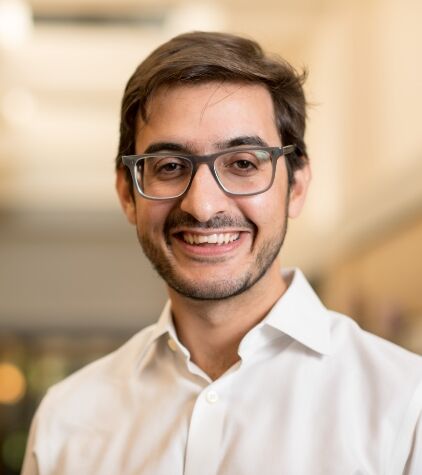



I am an Associate Professor of Political Science at the University of Notre Dame and a faculty fellow at the Kellogg Institute for International Studies. My research examines how citizens make democracy work in the developing world: whether they reward or punish incumbents at the polls, what they demand of states and markets, when they take to the streets, and, in my current work, whether they remain committed to democracy itself. Focusing on Latin America, I combine causal inference techniques, such as natural and survey experiments, with contextual knowledge drawn from extensive fieldwork. The American Political Science Association awarded me the 2026 Robert A. Dahl Award for scholarship of the highest quality on the subject of democracy.
My 2025 book, Incumbency Bias (Cambridge University Press. Studies in Comparative Politics), is the first book-length comparative investigation of why citizens systematically reward incumbents in some democracies and punish them in others. The book argues that whether office is a blessing or a curse hinges on how institutions shape the alignment between citizens' performance expectations and incumbents' capacity to deliver. It draws on fifteen months of fieldwork in Argentina, Brazil, and Chile, natural experiments leveraging fine-grained administrative data, and three original survey experiments. It also received the Latin American Studies Association’s Best Book Award in Subnational Politics and an Honorable Mention in Economics and Politics.
My current research examines the demand side of the contemporary crisis of democracy. With Scott Mainwaring, I am writing After Autocracy: Civil Liberties, Collective Memory, and Democratic Commitment, a book exploring when citizens in post-authoritarian societies commit to democracy. We argue and empirically establish that durable commitment is rooted in concerns over rights: where democracy visibly outperforms the autocratic past in protecting civil liberties, citizens develop commitments that survive even severe economic crisis. Memory building and transitional justice institutions, we show, are central to forming these beliefs. The book tests the argument with randomized experiments and panel surveys in Argentina, Brazil, Chile, and Mexico, original measures of citizens' beliefs about regime performance placed in fifteen countries of LAPOP's AmericasBarometer, and archival public opinion data spanning the post-transition period. A first article from this project available here is forthcoming at Comparative Politics.
I earned a Ph.D. in Political Science from Yale University and a B.A. in Political Science from Universidad Torcuato Di Tella. Previously, I was a Postdoctoral Prize Research Fellow in Politics at Nuffield College, University of Oxford. I am also a board member of the Argentine Panel Election Study and a research associate of the Center on the Politics of Development at UC Berkeley.